Can Education Break the Cycle of Division and Conflict? Learning from a South Sudanese Educator About Developing Students as Peacebuilders
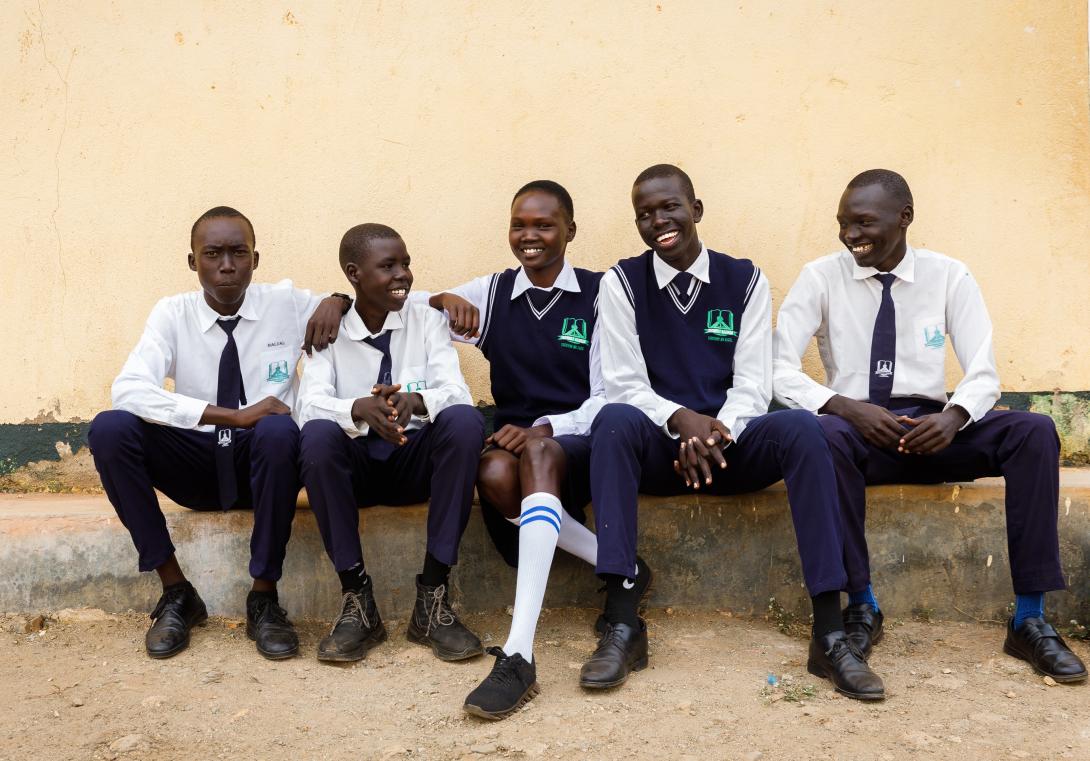
In South Sudan, the question of the purpose of education is inseparable from the country’s history. Since gaining independence in 2011, the nation has endured years of civil conflict, political instability, displacement, and violence rooted in tensions that predate independence and have often played out along ethnic lines. For young people growing up, education is taking place within a society where the stories communities tell about one another can deepen division or open possibilities for understanding.
Reflecting on this year's International Day of Peace, I had a conversation with Ngor Majak, a South Sudanese social entrepreneur, founder of Education Bridge, and a Global Institute BOLD Fellow, about the role of education as a path through which young people can imagine a different, better future, as well as encounter perspectives beyond their own, build relationships across lines of difference, and develop the skills and agency to shape an inclusive, just and peaceful country.
Growing up, Majak shared with me how it was common to absorb assumptions about people from other ethnic communities. Those assumptions often become accepted facts because there were few opportunities to test them in a homogeneous community. People could form strong opinions about others they had barely encountered, and from a distance, reduce whole groups to a single story.
We see this same trend across societies where inherited narratives, ethnic and racial categorization, and the political manipulation of identity have helped produce and deepen violence as well as struggles over power and resources.
Majak’s own thinking began to change when, as a young boy, he moved to a refugee camp and found himself studying, playing, and building friendships with young people from across South Sudan. For the first time, he encountered people he had previously known largely through stories told about them. That experience left him with new beliefs that have shaped much of his work since.
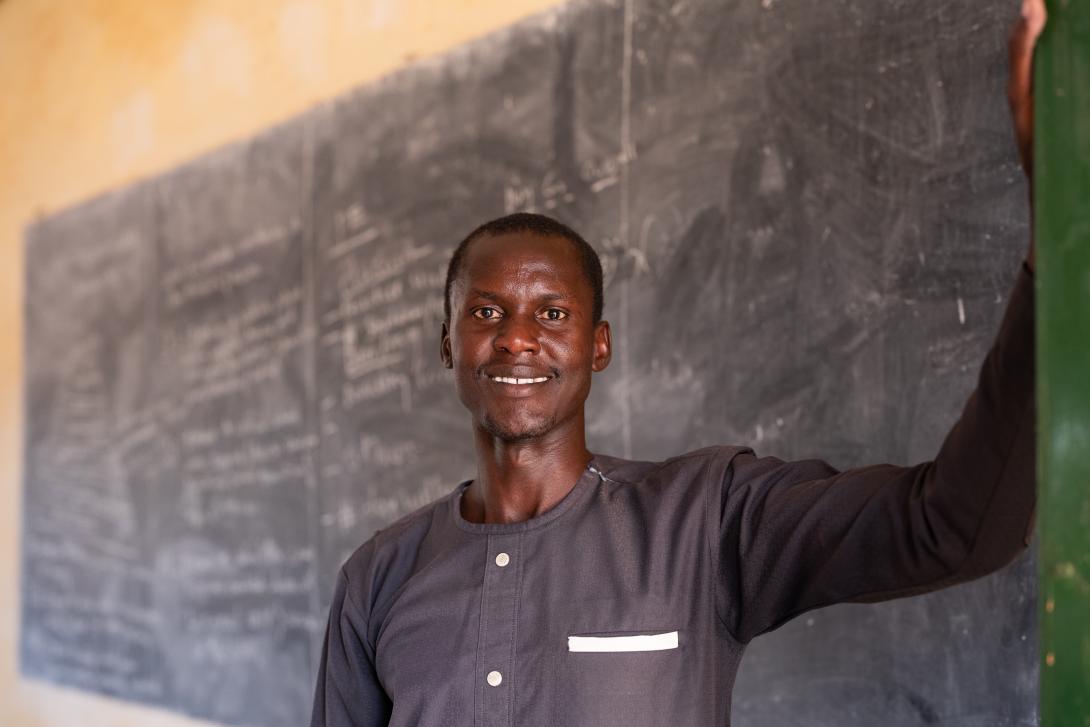
Today, he is building a network of schools that combines academic learning with peacebuilding and leadership development, while expanding opportunities for girls and preparing young people for university and life beyond school. Underlying this work is the belief that for South Sudan to move beyond its current challenges, young people need to be educated differently to create a cultural shift.
Recent research has shown that schools can shape both how young people perceive difference and how they behave when exclusion occurs around them, and that school norms can help develop young people who challenge exclusion rather than reproduce it. And evidence suggests that friendships across lines of difference can make young people less susceptible to prejudiced attitudes in the wider society, by giving them direct experiences that challenge inherited stereotypes.
Creating the conditions for peace through education
We often describe the aims of education only in terms of literacy, numeracy, qualifications or employment. But society asks much more of young people: to learn how to live alongside people whose histories, identities, beliefs and experiences differ from their own; how to navigate disagreement; how to make judgments about the narratives they inherit; and how to exercise agency to shape the future.
As societies across the world wrestle with different forms of polarization, this vision of education as a path to peace feels increasingly relevant far beyond South Sudan.
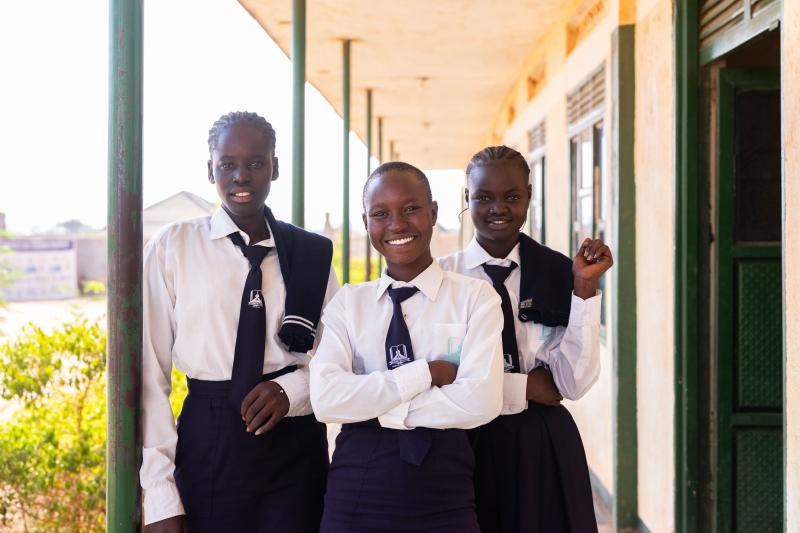
According to Majak, the purpose of education cannot be separated from the needs of the society it serves. In South Sudan, that means education must do more than equip young people academically. It must also help develop a generation capable of building a more peaceful and just country. At the schools he has helped build across the country, this has meant experimenting with several approaches.
- The first is storytelling. Young people arrive at school carrying stories about their own communities and about others. Majak and his colleagues create opportunities for students to tell their own stories, including experiences of conflict and loss, and to listen to the experiences of others. In some sessions, students have written about deeply personal experiences and then shared those accounts with peers from different communities. Majak remembers moments when students cried as they listened to one another. Stories can make inherited assumptions harder to maintain. A group described from a distance as threatening or fundamentally different becomes individual human beings whose lives contain grief, love, fear, courage, and hope.
- The second is proximity. Stereotypes can survive when people have little opportunity to encounter contradictory evidence. Majak’s school intentionally brings together students from different communities and creates opportunities for them to live, study, play, and work alongside one another.
- The third is practice and development of social skills. Living peacefully across differences requires capacities that can be developed: self-awareness, listening, perspective-taking, conflict resolution, dialogue, and the ability to disagree without dehumanizing another person.
Building students as leaders with the skills to build peaceful and just societies
If young people come to recognize that some of the narratives they inherited are harmful or unjust, what will they do with that realization? Can they challenge those narratives when they encounter them? Can they build institutions differently and contribute to a more peaceful, just, and inclusive political and social culture over time?
During our conversation, Majak reflected his ambition to develop young people who can imagine possibilities for their communities and work with others to bring them about. These leaders will build across divisions and draw on ideas from around the world while remaining rooted in the needs of South Sudan.
“We are using education as a bridge to peacebuilding,
as a bridge to a more united South Sudan.”— Ngor Majak Anyieth
Some of his former students are already beginning to offer examples of what this could mean. One alumnus went to university and returned to South Sudan to build an organization establishing libraries across the country. Another, studying at the University of Notre Dame, returned home and organized activities using basketball as a way of bringing young people together.
For these shifts to endure, the work cannot stop with students; teachers, families, and communities also need to help create the conditions in which new ways of relating across differences can take root.
Helping young people to develop the leadership capacity to build more peaceful and just communities is long-term work and sometimes hard to measure. Some of education’s most consequential effects may only become visible years later, when today’s students become teachers, parents, civil servants, entrepreneurs, political leaders, journalists, and community organizers.
Every day, millions of young people enter classrooms where they are learning, explicitly and implicitly, how society works, how disagreement is handled, and who counts as “one of us”. At Teach For All, we have begun asking how we can reshape schools in order to shape the conditions that support peace and justice.
What role can education play in helping young people navigate differences and contribute to more peaceful and just societies? What can we learn from educators already doing this work in contexts where the stakes are exceptionally high?
I’m so grateful for Majak’s example–a lighthouse that is showing us the way.
If you’re an educator or organization working on peace education, or on approaches that are helping young people grow the capacities to navigate difference, conflict, and division, we’ll be exploring these questions further through our Global Institute in the year ahead. Please reach out to Radha at @email if you’re interested in contributing to our learning inquiry.