Singapore Education Lounge
2 April 2026 - Singapore
~60 engaged | Sinapore & Global
By: Francesca Wah
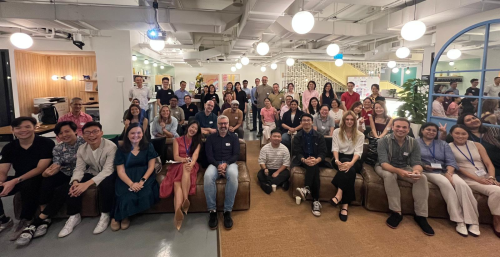
Few weeks on, I am still sitting with the conversations from the dialogue session—and the honesty of the youths I had the chance to interact with.
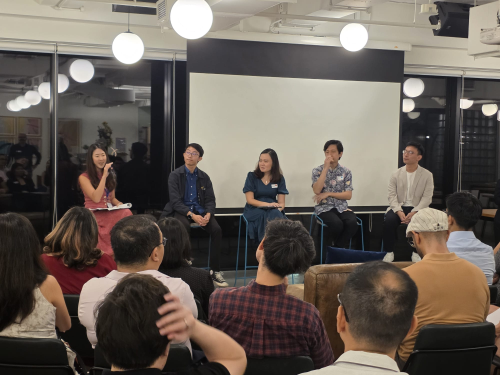
In my sharing, I spoke about how preparing students for the future isn’t about giving them the right answers, but about developing the dispositions to think, care, and act. That means designing learning that goes beyond content coverage—where students question deeply, engage with real issues, and see themselves as contributors, not just recipients.
Systems Influence: Holistic outcomes measurement helps to make the invisible visible by turning "soft skills" into data that can drive systemic priorities. Improved measurement of holistic outcomes can foster a greater appreciation for the holistic development of students.
Next Steps: The next step is to create a research report with contributions of working group members that will produce guidance on the purpose of measurement of holistic outcomes, the importance of supporting teachers to reflect and monitor shifts in mindsets with their coaches, and effective measurement and monitoring tools to understand student SEL progress. The writing process will leverage the diverse expertise of members to produce a high-quality report that reflects a locally-rooted and globally-informed perspective on effective SEL measurement.
My sharing resonated with fellow educators. Many of us are already trying, in our own ways, to shift from content delivery to designing for thinking, from compliance to agency, and from performance to meaning. But the tension is real. Our aspirations are evolving faster than the systems that support them.
If we are serious about change, the work has to go beyond individual classrooms. It requires alignment—in what we value, how we assess, and the conditions we create for both teachers and students.
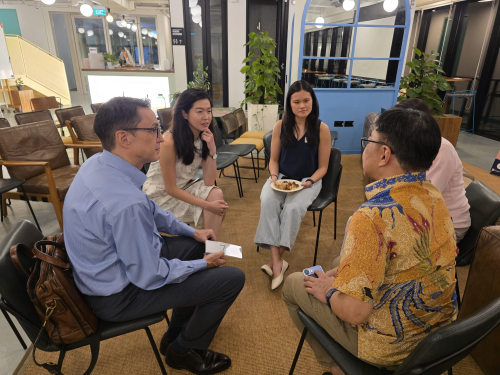
What struck me most were the students’ perspectives I gathered from my table that day.
Several of them shared, quite candidly, that much of what they learn in school could be learnt online. What they value—and wish they had more of—are lessons that focus on application: opportunities to discuss, create, solve, and make meaning together. It’s not a rejection of knowledge, but a call for learning that feels purposeful and lived.
They also shared how stressful assessments are to them. The idea that a single end-of-semester paper—3 or 4 essay questions—define their grade for the course is not an accurate representation of how and what they have learnt for the semester. The youths felt that the assessments do not capture their growth, their thinking process, or the effort across time. When assessment feels narrow, it inevitably shapes how students approach learning.
The youths’ reflections were not complaints. Rather, I felt they were thoughtful, reasoned, and, in many ways, entirely valid. It made me think: if our students are already articulating these gaps so clearly, then the question is not whether change is needed, but how we respond within the system we are in.
Perhaps part of the work is this:
- To design more application-rich learning experiences—where knowledge is used, not just acquired
- To create spaces for dialogue and student voice, where thinking is surfaced and stretched
- To rethink assessment as something more ongoing and reflective, not just episodic and high-stakes
- To make learning more visible—through drafts, feedback, iteration, and portfolios that capture growth over time
None of this is simple, especially within existing constraints. But neither is it impossible.
The session was a reminder that our students are ready. They are thoughtful about their learning, aware of its limitations, and open to something more meaningful. The responsibility, then, is on us—as educators and as a system—to listen carefully, design intentionally, and create the conditions where learning is not just something that is completed, but something that is experienced, questioned, and owned.
Leaving with both a sense of urgency and a quiet optimism that these conversations are moving us, slowly but surely, in the right direction.