
Student Discussion at UWC(SEA)
27 April 2026 - Singapore
~20 engaged | Singapore and Global
By: Serena Xiao
These reflections come from a discussion I had with fellow students around the question: What will it take to equip students to shape a better future? What follows is not just my individual perspective, but a synthesis of ideas, tensions, and insights that emerged through our shared dialogue—shaped by our experiences in the Systems Transformation course.
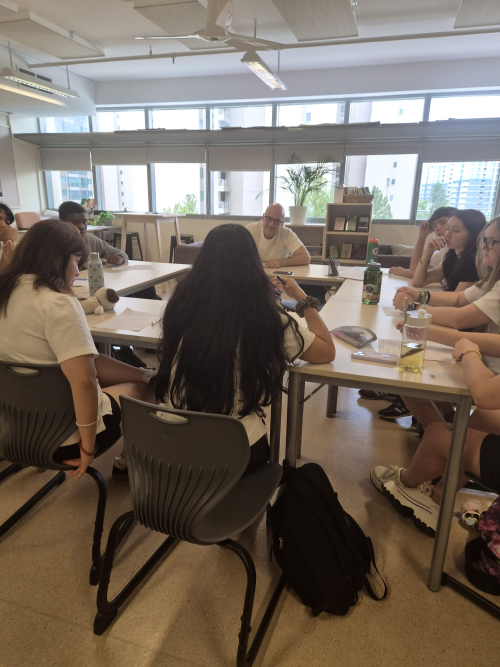
Traditional education has long focused on linear, subject-specific knowledge that trains students to solve isolated problems with predefined answers. However, as I have learned throughout this Systems Transformation course, we do not live in a linear world. To equip students as legitimate and urgent stakeholders capable of shaping a better future, we must shift the educational paradigms to help them navigate complex, interconnected realities driven by non-linear shifts, feedback loops, and dynamic stakeholder relationships. I believe a better future is a place where everyone can advocate for themselves and their beliefs, practicing storytelling through a variety of mediums—such as speech, writing, and theater—within a safe, non-judgmental environment.
Our recent discussion illuminated the macro and micro barriers to this vision. A significant macro issue, particularly visible in highly developed frameworks like the Singaporean and Chinese school systems, is having abundant learning resources yet fostering minimal creativity because the lesson plans are fixed with a fixed teaching method, leaving very few immersive communication opportunities among students and professors. When students operate within rigid, traditional structures, they often develop a false sense of overconfidence in the predefined paths. However, the real world is far more complicated and the students will lack the ability to handle shocks and unexpected events as well as the ability to identify key leverage points to improve the functioning system.
As my peers noted during our discussion, curiosity and creativity are the keys to revolution. Transitional education should not necessarily be abolished, but we must prioritize the learning environment and the process of how students acquire and process information. "Non-traditional" does not mean lack of policy; it means establishing flexible frameworks specialized to fit cultural contexts, ensuring all cultural differences are respected and integrated.
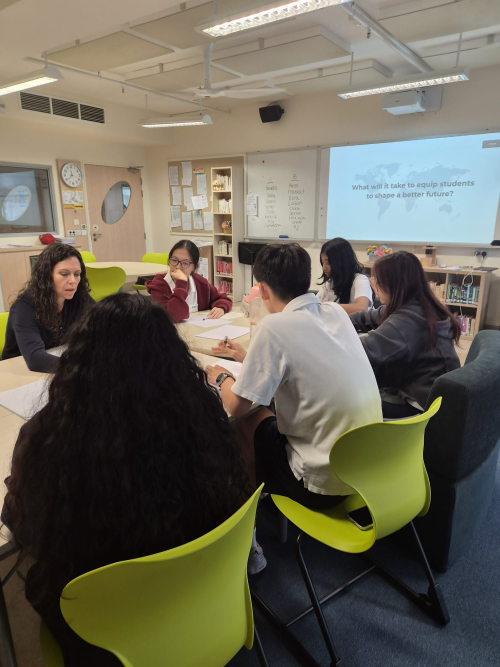
To catalyze this transformation, we, as changemakers, must build a universal reinforcing feedback loop driven by two components: deep knowledge on how systems work and the provision of immersive spaces—an environment where students are not judged and their ideas are actively encouraged—are high-leverage points. One of the greatest barriers in youth advocacy is the lack of confidence to take the first step (also mentioned in “Reclaim Your Creative Confidence” by Tom and David Kelly). By providing time for in-depth thinking and peaceful communication, we break down information barriers and allow students to build the resilience they need in order to disrupt institution inertia (a new word I learned that means “maintaining status quo routines even when faced with new information or pressure to adapt").
My own experiences outside of the classroom have proven to me that storytelling is one of the most powerful tools to effect systemic change. Storytelling teaches students how to present themselves publicly and defend their rights when faced with systemic oppression. More than just a skill, it is a way of reclaiming agency and reshaping how one is seen—both by others and by oneself. I was deeply moved by a conversation with a 15-year-old Rohingya girl who had escaped a forced marriage to pursue education. Her story was not a tragedy; it was a powerful act of agency. In telling it, she was not just recounting what had happened—she was redefining her identity and her place in the system. Through storytelling, she shifted from being perceived as a dependent stakeholder to becoming a definitive one, gaining the voice and confidence to advocate for her own and her peers’ rights. That moment made it clear to me that storytelling is not just expression—it is transformation. It is why creating environments where students can safely find and use their voice is so critical.
Equipping students to shape a better future requires more than just teaching them to identify leverage points or map casual loops; it demands that we foster empathy. By blending academic rigor with a safe, creative environment for storytelling, we can empower students and the next generation to not only survive the shocks in the non-linear future but also actively engage in the designing process of a more just, interconnected, and colorful world.