WISE Panel Discussion on “What will it take to equip students to shape a better future?”
25 Nov 2025 - Doha, Qatar
~50 participants | Global
By: Dana Safa, Qatar Student Leader
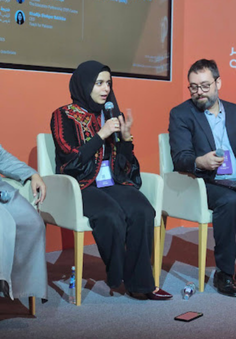
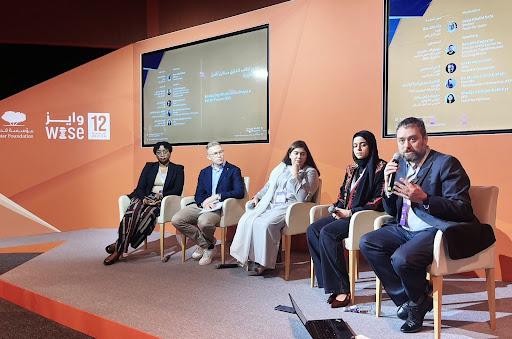
Our mission at the World Innovation Summit for Education (WISE) was simple: to send a message,whether directly or indirectly that could create an impact. And surprisingly, that message made a real difference. It left a mark, and the most unexpected part was how much it affected me personally. The conversations and preparations leading up to the panel helped me see things I hadn’t fully understood before. Today, I want to share what I learned, especially about leadership and how important it is to listen, trust, and give responsibility.
My biggest inspiration came from my experience earlier this year in Singapore with the Global Institute’s Global Advisory Council. There, I learned that students are at the heart of education. I realized that leadership isn’t just about guiding others; it’s about creating an environment where students feel valued, heard, and empowered to take charge. Social-emotional skills are key to developing resilient students who can lead confidently. I also saw that leadership involves trust, trust between students and teachers, between peers, and between students and the systems that serve them. Leadership is about building a culture where mistakes are seen as part of learning, not failures. And most importantly, I understood that students are the main stakeholders, they should be the ones driving their own education and future.
As we prepared for the WISE panel, we had a bunch of discussion meetings. During one rehearsal, I emphasized that listening to students is crucial. I believed that understanding their voices was the first step to making real change. But Lasse Leponiemi (co-founder, HundrED) challenged me. He said that listening alone isn’t enough; we need to trust students and give them responsibility. He explained that leadership means empowering students, letting them have roles where their contributions can influence decisions and lead to actual change. That moment made me realize something important: listening is just the beginning. What really matters is what we do after we listen. Giving students responsibility and trusting them to lead, that’s how we turn ideas into action. That was a big shift in my thinking. I started to see that many talk about student leadership, but few actually give students the real power to lead.
When the panel finally happened, I was proud to be there with inspiring people like Lasse, Dr. Modupe (‘Mo’) Olateju (Fellow, Brookings CUE),Khadija Bahktiar (Co-Founder and CEO, Teach For Pakistan), and Dominic Regester (Director of the Center for Education Transformation at Salzburg Global). We talked about what it takes to build a better future for students. I shared my belief that leadership is rooted in trust, responsibility, and listening. We need to prepare students with the skills to lead change, not just participate in it. Khadija talked about empowering students even when their goals differ from those of adults, helping them reach their personal visions while also contributing to their communities. Lasse shared an inspiring example, the HundrED youth ambassador program, where students actually influence decisions that affect their lives. He also talked about the rage that fuels student activism, a powerful feeling of dissatisfaction with the current system that pushes young people to push for change. Dr. Mo emphasized the idea of “by students, for students”, a core belief I strongly believe in, based on her experiences.
During the Q&A, I was asked how students, systems, and leaders can better understand each other. I said that leadership is about trust and respect. Systems and leaders need to see that students aren’t here to overthrow authority, they want to work together. We seek respect, evidence, and real change. We want to contribute meaningfully, not just complain. When asked how to get systems to listen, I said that facts and real results are the way. Leadership involves showing value through evidence and shared goals.
Even after the panel, I felt a bit lost or doubtful. Some of what I said felt rehearsed, and I wondered if I was truly embodying the leadership I was talking about. I remembered something I learned in Singapore: “Why before how.” It made me think about the deeper reasons behind what we do, why we want change and what kind of leadership is needed to make it happen. I talked with a talented student friend who said she didn’t have much to say beyond “education is important but flawed.” That made me realize that at the core of leadership are our basic needs—trust, listening, conviction, and the right questions. Why do systems ignore us? Why is it so hard to be heard? These questions are crucial because they get to the heart of leadership and change.
In the end, I learned that changing a system that’s considered “the best” isn’t easy. It’s tough to break down old structures and see what’s wrong. The hardest part is figuring out what to do next, how to turn ideas into real action. But I’m motivated because I believe that real leadership starts with understanding, trust, and the willingness to act. This experience made me realize that leadership isn’t just about authority. It’s about inspiring others, listening deeply, and working together toward shared goals.